Consumer behavior research in the beauty industry consistently shows that packaging personalization creates emotional attachment, which directly influences repurchase decisions. A powder compact case is a particularly powerful vehicle for personalization because it is a daily-use item that consumers carry, display, and interact with repeatedly. When a consumer receives a compact case personalized with their initials, a custom color, or a design that reflects their identity, the packaging transforms from a disposable container into a personal accessory. This transformation extends the product lifecycle beyond the initial purchase. Studies in consumer psychology indicate that personalized products have a 40 percent higher likelihood of repurchase compared to standard alternatives, particularly in the color cosmetics category. For brands, this means that investing in compact case personalization is not a cost but a customer retention strategy with measurable returns.
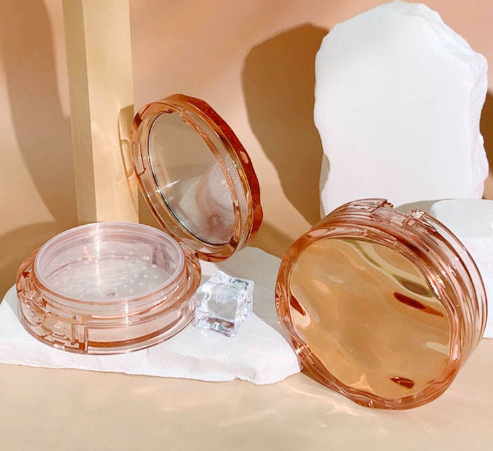
The most effective mechanism for converting a personalized powder compact case into a repurchase driver is the refillable system. A well-designed refillable compact allows consumers to purchase replacement pan inserts at a lower price point while retaining the personalized outer case. This creates a two-tier product architecture: the initial purchase includes the personalized case and product, while subsequent purchases are refill-only at a reduced cost. For the brand, refill systems offer higher margins on refills (lower packaging cost per unit) and create a predictable repurchase cycle. The structural design must ensure that the refill mechanism is intuitive, secure, and satisfying to use. Magnetic pan systems have become the industry standard because they provide tactile feedback when the pan clicks into place, reinforcing the premium experience. Precision mold design is critical here: the magnetic insert must align perfectly with the case cavity to prevent rattling or misalignment during daily use.
Effective personalization of a powder compact case goes beyond monogramming. Consumer research identifies several high-impact customization options: (1) exterior color matching to brand-specific Pantone references, creating visual consistency across product lines; (2) surface finishing techniques including matte, glossy, and frosted options that change the tactile and visual character of the same base design; (3) custom mirror shapes or etched mirror patterns that add surprise and delight during daily use; (4) interchangeable decorative panels or inserts that allow consumers to refresh the compact appearance without replacing the entire case. The technical feasibility of these options depends on the supplier's manufacturing capabilities. Suppliers offering precision injection molding, UV printing, and surface coating in-house can execute multi-layer customization without outsourcing delays. For brands, the key is selecting personalization options that are technically reliable in mass production, not just impressive in prototype form.
The transition from personalized prototype to mass production is where many compact case customization projects fail. Quality consistency challenges include color matching across production batches, surface finish uniformity, and dimensional accuracy of custom mold features. A powder compact case with a slightly off-color exterior or a misaligned magnetic insert immediately signals lower quality to the consumer, undermining the personalization premium. Suppliers with strict in-house quality control systems, covering material inspection, in-process monitoring, and final quality checks, are better positioned to maintain consistency. Quality control metrics should include color difference tolerances (Delta E values), surface finish consistency measurements, and functional testing of the magnetic closure and hinge mechanism. For brands ordering personalized compacts in volumes of 50,000 units or more, establishing AQL (Acceptable Quality Limit) standards with the supplier before production begins is essential to manage quality expectations and prevent disputes.
Consider a mid-tier beauty brand launching a personalized powder compact case line for the Southeast Asian market. The brand offers three exterior colors, custom initials engraving, and a magnetic refill system. Initial order volume is 30,000 units across all variants. During supplier evaluation, the brand should prioritize: (1) mold precision capability, verified by requesting dimensional inspection reports from previous projects; (2) surface finishing consistency, tested by ordering pilot batches in all three colors and measuring Delta E against Pantone references; (3) engraving quality, assessed by evaluating font clarity and depth consistency across different letter combinations; (4) magnetic closure reliability, tested through repeated open-close cycles simulating 12 months of daily use. A supplier with integrated manufacturing capabilities, including injection molding, surface coating, and precision engraving, can manage all quality aspects internally, reducing the risk of inconsistent sub-supplier quality that often plagues multi-vendor projects.
Q: What is the typical MOQ for personalized powder compact cases?
A: Most manufacturers require a minimum order quantity of 10,000 to 20,000 units for personalized compact cases. Custom mold development may increase the MOQ to 30,000 units. For engraving or printing personalization on existing molds, some suppliers offer lower MOQs of 5,000 units per variant.
Q: How does a magnetic refill system work in compact cases?
A: Magnetic refill systems use embedded magnets in the compact base that attract a metal plate on the product pan. This allows consumers to simply drop in a replacement pan that snaps securely into place. The system requires precise magnet positioning during injection molding to ensure consistent holding force across all units.
Q: Can I use recycled materials for personalized compact cases?
A: Yes, ABS and PP materials used in compact cases can incorporate recycled content, typically 20 to 50 percent depending on structural requirements. However, recycled material may affect color consistency and surface finish quality, so thorough material testing is recommended before mass production.
|
Option |
Consumer Impact |
Production Complexity |
Repurchase Effect |
|
Custom color (Pantone) |
High visual identification |
Medium |
Medium |
|
Initials engraving |
Strong emotional attachment |
Low |
High |
|
Surface finish (matte/glossy) |
Tactile differentiation |
Low |
Medium |
|
Magnetic refill system |
Functional convenience |
High |
Very high |
|
Interchangeable panels |
Refreshable design |
High |
High |


 EN
EN