Global beauty brands sourcing from cosmetic packaging China factories are no longer motivated solely by competitive pricing. The decision to partner with a Chinese packaging manufacturer increasingly reflects a supplier's ability to deliver on emerging design trends, integrated production capabilities, and responsive customization that align with fast-moving consumer expectations in North America, Europe, the Middle East, and Asia. Understanding which trends are reshaping buyer priorities helps procurement professionals evaluate suppliers more effectively and anticipate where the packaging industry is heading.
Across beauty markets from Seoul to Los Angeles, transparent cosmetic packaging has become one of the most consistent design preferences among consumers and brands alike. Clear flip lids on eyeshadow palettes, transparent jars for creams, and see-through compact cases allow shoppers to directly view product colors and textures before purchase, building confidence in both online and retail environments. Chinese cosmetic packaging factories have responded to this demand by refining transparent ABS injection molding processes to achieve optical clarity without sacrificing impact resistance. The manufacturing challenge lies in producing transparent components that remain free of flow marks, bubbles, and yellowing over time, which requires precise temperature control during molding and high-grade raw material sourcing.
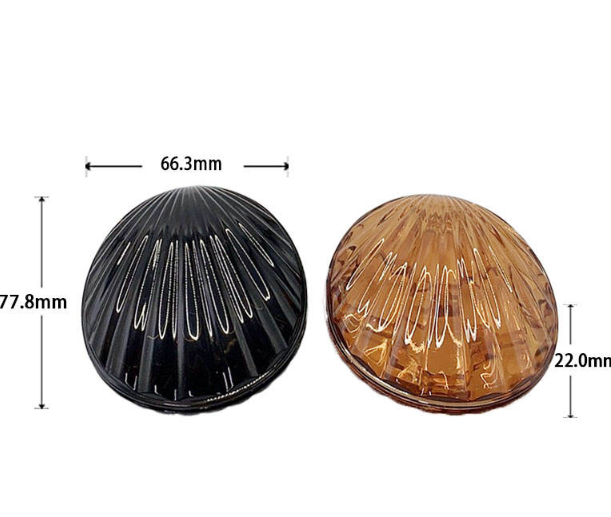
International buyers increasingly prefer cosmetic packaging China suppliers that can manage the entire production chain under one roof: mold design and fabrication, injection molding, surface decoration including electroplating, hot stamping, screen printing, gradient finishing, and soft touch coating, assembly, quality inspection, and global logistics. This integration reduces the coordination burden on the buyer and compresses project timelines. For a busy procurement manager handling multiple product lines, the ability to work with a single supplier that owns all processing stages translates directly to fewer vendor communications, shorter feedback loops, and reduced risk of quality gaps at handoff points.
Environmental considerations have moved from marketing messaging to procurement criteria. Global buyers now evaluate cosmetic packaging China factories on their approach to material optimization, production waste reduction, and recyclability of finished products. While ABS plastic remains the dominant material for cosmetic compact cases, buyers increasingly ask about recycled content options, production scrap recovery rates, and energy-efficient manufacturing practices. Factories that can articulate their sustainability approach with specific metrics rather than vague commitments stand out in supplier evaluations. The key insight is that sustainability in Chinese cosmetic packaging manufacturing is not about abandoning proven materials like ABS, but about optimizing their use and demonstrating responsible production practices.
A notable shift in cosmetic packaging aesthetics is the movement toward structured geometric forms, particularly square and rectangular compact cases, as alternatives to traditional round compacts. Square designs offer practical advantages: efficient stacking for storage and transport, organized internal pan layouts for multi-color products, and a clean modern appearance that photographs well for e-commerce and social media. Chinese cosmetic packaging manufacturers have responded with refined square mold designs that maintain precise corner geometry, consistent wall thickness, and smooth surface finishes. The electroplated square compact case has become a popular option for brands launching premium product lines targeting younger demographics in Asian and Middle Eastern markets.
The global shift toward portable, multi-use beauty products has created demand for packaging that supports this lifestyle. Compact cases with built-in mirrors, magnetic closures that prevent accidental opening in bags, and slim profiles that fit into small purses are features that buyers actively seek from cosmetic packaging China suppliers. The square magnetic cushion compact case with electroplated finish exemplifies this trend: it combines a secure magnetic closure for travel safety, a built-in mirror for touch-up convenience, and a structured square form that maximizes product capacity while maintaining a slim profile.
A growing consideration for beauty brands is how packaging performs in digital environments, not just on physical shelves. Transparent lids, electroplated finishes, wave-textured surfaces, and gradient coatings create visual interest that translates well to product photography, Instagram flat lays, and TikTok unboxing videos. Cosmetic packaging China factories that understand this digital dimension offer design features that enhance visual storytelling. While technical quality and functional reliability remain the foundation of buyer decisions, packaging that performs well in digital marketing channels provides an additional competitive edge that sophisticated buyers now factor into supplier selection.
Q: How can I verify that a cosmetic packaging China factory truly offers integrated manufacturing?
A: Request a detailed production flowchart showing the physical location of each processing stage. Ask direct questions: where is mold design and fabrication done? Is surface decoration like electroplating performed in your own facility or sent out? Review in-process QC documentation for evidence of continuous monitoring across stages. A factory tour is the most reliable verification method.
Q: Are Chinese cosmetic packaging factories keeping up with sustainability requirements for European and North American markets?
A: The level of sustainability readiness varies significantly between factories. Leading suppliers have implemented scrap recovery systems, energy-efficient injection machines, and documented material sourcing. Ask for specific data on recycled content percentages, waste management processes, and any environmental certifications they hold.
Q: What is the most important trend to prioritize when selecting a cosmetic packaging supplier in China?
A: Integration capability remains the most impactful factor because it affects cost, quality, lead time, and communication efficiency simultaneously. A supplier that manages mold development, decoration, QC, and logistics in-house provides a structural advantage that individual design trends cannot compensate for if missing. Start by verifying integration, then evaluate alignment with aesthetic and sustainability trends.
COMPARISON TABLE
|
Trend |
Buyer Priority |
Implementation Level |
Market Impact |
|
Transparent Packaging |
High |
Medium to High |
Improves online conversion |
|
Integrated Manufacturing |
Highest |
Varies widely |
Reduces lead time 30-50% |
|
Sustainability |
Growing |
Low to Medium |
EU minimum requirement |
|
Square Geometric |
Medium |
High |
Asia/MidEast appeal |
|
Travel-Friendly |
Medium-High |
Medium |
Expands use cases |


 EN
EN