For everyday makeup users, few things are as frustrating as opening an eyeshadow palette only to find fine powder dust has migrated between color pans, dulling the appearance of the entire palette. In professional makeup settings, cross-contamination between shades is more than an annoyance; it compromises color accuracy and hygiene standards. Dust proof design in eyeshadow palette packaging is not a cosmetic afterthought but a functional necessity that directly impacts product longevity, user satisfaction, and brand reputation. Understanding the specific design features that prevent dust migration helps beauty brands make informed packaging decisions during product development.
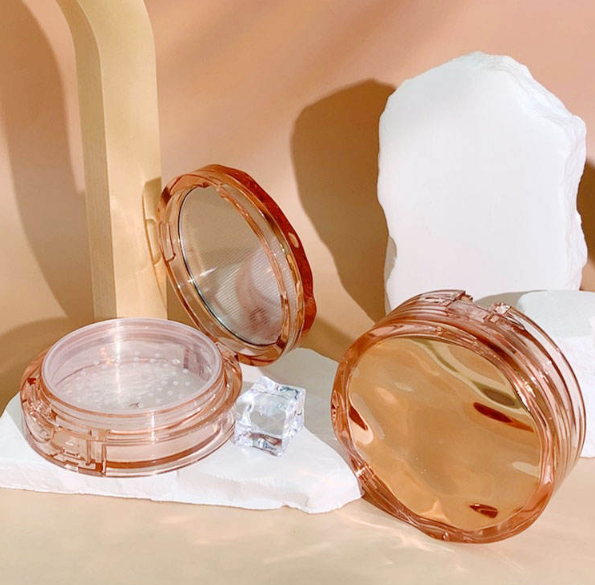
The most fundamental dust proof element in eyeshadow palette packaging is the closure mechanism. A flip lid design creates a continuous barrier when closed, preventing airborne powder particles from settling on the product surface during storage. Transparent flip lids, as seen on ABS eyeshadow palettes with clear covers, offer an additional advantage: the user can visually confirm the condition of the product without opening the case, reducing unnecessary exposure to environmental dust. The hinge mechanism plays an equally critical role. A well-engineered hinge maintains consistent alignment between the lid and base over thousands of open-close cycles, ensuring the seal does not degrade with use. ABS material's dimensional stability under typical storage and transport temperatures makes it a reliable choice for maintaining lid-to-base alignment over the product's lifecycle.
While snap-fit closures rely on mechanical friction that can wear down over time, magnetic closure systems provide consistent sealing force throughout the product's life. A magnetic compact case uses embedded magnets in the lid and base to pull the two halves together with uniform pressure around the closure line. This even force distribution minimizes the micro-gaps that develop in friction-fit closures after repeated use, making magnetic systems particularly effective for palettes that users will open and close daily. For eyeshadow palette packaging, the magnetic strength should be calibrated to balance security with ease of opening; too much magnetic force makes one-handed opening difficult, while too little compromises the dust seal. Quality-controlled production processes, including magnetic strength testing and hinge durability evaluation, help ensure that each unit maintains its sealing performance from the factory floor to the consumer's makeup bag.
Dust proofing is not solely a function of the outer closure; the internal configuration of the palette also affects how powder behaves within the case. Well-designed eyeshadow palette packaging positions individual color pans with adequate spacing between them, creating physical separation that limits cross-contamination when powder fallout occurs. Square palette designs with structured grid layouts, such as 5-color or 6-color configurations, offer more predictable pan placement than irregular shapes, allowing for precise dividers between shades. The depth of each pan cavity relative to the palette surface also matters; deeper recesses contain loose powder more effectively than shallow pans that allow particles to spill over the divider walls.
Even with excellent sealing, some powder residue will inevitably find its way onto the palette surface during use. The ease with which this residue can be cleaned directly affects the user's daily experience. Smooth, non-porous surface finishes such as electroplated coatings, glossy injection-molded surfaces, and polished ABS exteriors allow users to wipe away powder dust with a tissue or cloth, restoring the palette to a clean appearance. Matte and soft-touch finishes, while aesthetically appealing, tend to trap fine particles in their microscopic surface texture, making cleaning more labor-intensive. When selecting surface treatments for eyeshadow palette packaging, brands should consider cleanability alongside visual appeal, particularly for palettes positioned as everyday-use products.
A cosmetic brand selling a popular 6-color eyeshadow palette received consistent feedback that powder dust accumulated around the hinge area after several weeks of use, eventually making the palette look worn and dirty. Investigation revealed that the original hinge design used a simple pin-and-socket mechanism with no dust shield. The brand worked with their packaging supplier to redesign the hinge with an integrated dust shield: a small flexible lip that covered the hinge gap when the lid was in the open position while maintaining full hinge mobility. The redesigned hinge eliminated the dust trap without changing the palette's external appearance or increasing unit cost by more than a few cents. Post-redesign customer feedback showed a significant reduction in complaints related to hinge-area powder accumulation, and the brand's product rating on e-commerce platforms improved noticeably.
Q: Which closure type provides the best dust protection for daily-use eyeshadow palettes: flip lid or magnetic?
A: Both can provide excellent dust protection when properly engineered. Magnetic closures offer the advantage of consistent sealing force over time and more even pressure distribution around the closure perimeter. Flip lids with well-designed snap mechanisms can also perform well, especially when paired with a tight-fitting rim. The key factor is not the closure type itself but the precision of the mold and assembly quality.
Q: Does a transparent lid offer better dust protection than an opaque one?
A: The transparency of the lid does not directly affect dust sealing performance, which depends on the closure mechanism and rim design. However, a transparent lid indirectly supports dust management by allowing users to check the product without opening the case, thereby reducing unnecessary exposure and lowering the cumulative amount of dust that enters the palette over its lifetime.
Q: How can I test the dust proof performance of palette packaging before mass production?
A: A practical test involves placing a small amount of fine face powder on the interior surface of a sample palette, closing it, and subjecting it to vibration or shaking for a defined period, then visually inspecting whether any powder has escaped through the closure line. Additionally, request the supplier's in-process quality control documentation covering lid alignment, hinge function, and closure force testing.


 EN
EN