When a beauty brand develops a new powder product, the packaging budget can quickly escalate beyond initial estimates if cost variables are not actively managed during the customization phase. Powder compact cases involve multiple cost drivers including tooling, material, decoration, assembly, and minimum order quantity. The key to cost optimization is not simply negotiating a lower unit price, but making informed design and process decisions early in the project that reduce total landed cost without compromising product quality or brand perception.
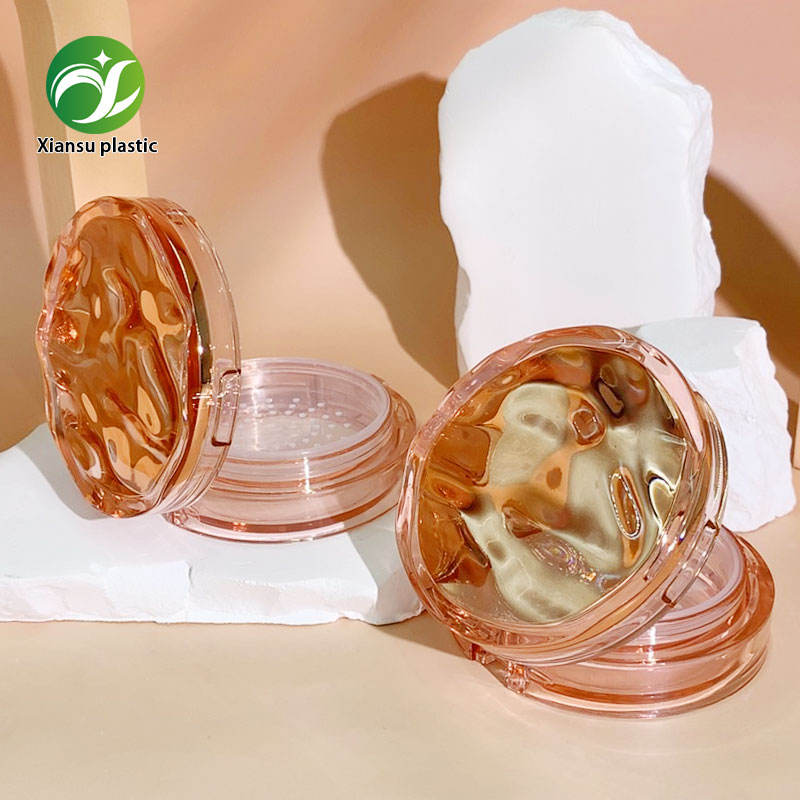
The choice of plastic resin is the single most influential factor on powder compact case cost, affecting both raw material price and processing efficiency. ABS plastic is widely used in cosmetic compact packaging due to its balance of strength, surface finish quality, and moldability. ABS typically offers a lower material cost per unit compared to AS or PC while maintaining sufficient impact resistance for daily use. The dimensional stability of ABS also means fewer mold adjustment iterations during development, translating to shorter lead times and lower tooling trial costs. When evaluating material options, consider not just the per-kilogram resin price, but also the mold cycle time, scrap rate, and decoration compatibility of each material.
Custom mold development represents one of the largest upfront costs in a powder compact case project, often ranging from several thousand to tens of thousands of dollars depending on complexity. One cost-saving strategy that experienced buyers adopt is starting from a supplier's existing mold library rather than commissioning fully bespoke tooling. Many cosmetic packaging manufacturers maintain an inventory of proven mold designs for standard shapes and sizes. By selecting a square compact case with dimensions such as 79.7mm or 75.4mm, or other commonly available form factors, brands can eliminate or significantly reduce new mold investment. The cost savings from using an existing mold base can then be redirected to decoration and branding elements that create differentiation.
Surface finishing and logo decoration are where packaging communicates brand identity, but they are also where costs can multiply if not strategically planned. Electroplating produces a premium metallic finish but adds more cost per unit than matte coating or simple screen printing. Hot stamping delivers a luxurious gold or silver foil effect but requires dedicated tooling for each design. For brands seeking cost optimization, a layered approach works well: use a cost-effective base finish such as Pantone-matched injection coloring for the main body, and reserve premium techniques like hot stamping or UV printing for the logo area only. Soft touch finish and gradient effects fall in the middle range, offering distinctive tactile and visual appeal at moderate additional cost.
Minimum order quantity is not just a supplier requirement; it is a direct cost driver. Most cosmetic packaging manufacturers set MOQs around 10,000 pieces for custom powder compact cases, as this volume amortizes mold development cost, setup time, and material procurement across enough units to achieve a reasonable per-unit price. Ordering below the standard MOQ typically results in a surcharge that can increase unit cost by 15 to 30 percent because the fixed costs are spread across fewer pieces. Brands that anticipate multiple product variants can aggregate volume by using the same base compact across different formulations. Another approach is phased ordering: commit to an initial order that covers the first production batch plus a smaller buffer, with the understanding that follow-up orders will benefit from reduced setup costs since molds are already prepared.
The internal configuration of a powder compact case adds cost through increased mold complexity, additional assembly steps, and separate component sourcing. A magnetic closure system requires precise magnet placement and adds component cost, but may be worth the investment if the brand positioning demands a premium tactile experience. In contrast, a simple snap-fit or flip-lid closure mechanism reduces parts count and assembly labor while still providing reliable product protection. Similarly, built-in mirrors add cost for the glass component and the scratch-resistant coating, whereas a mirror-free design saves on both material and breakage-related quality issues. The cost optimization question is not whether to include these features, but whether each feature contributes proportionally to the product's market positioning and willingness-to-pay.
A mid-size cosmetic brand developing a blush powder line and an eyeshadow palette simultaneously faced a combined tooling budget that exceeded their initial allocation. Rather than commissioning separate molds for each product, the brand worked with their packaging supplier to identify a shared base compact design that could serve both the blush case and the eyeshadow palette. The common base used the same ABS material, the same square footprint, and the same flip-lid hinge mechanism. Differentiation was achieved entirely through decoration: the blush version received a soft-touch matte finish with rose gold hot stamping, while the eyeshadow version used a glossy electroplated finish with silver foil logo. The shared mold saved approximately 40 percent on tooling investment, and the combined production run brought per-unit costs down by about 25 percent compared to two separate smaller orders.
Q: What is a realistic budget range for custom powder compact case tooling?
A: Mold costs for powder compact cases vary significantly based on complexity, material, and cavity count. A simple single-cavity ABS compact mold may cost a few thousand dollars, while a complex multi-cavity mold with magnetic closure integration and textured surfaces can exceed ten thousand dollars. Discussing your budget range early and asking whether existing mold bases can be adapted is the most effective way to control tooling costs.
Q: How do I decide between electroplating and simple spray coating for my compact finish?
A: The decision depends on your brand positioning and target price point. Electroplating delivers a high-shine metallic appearance suitable for mid-to-premium product lines and adds moderate cost per unit. Spray coating or matte finishing provides a clean, contemporary look at lower cost. If budget is tight, consider electroplating only the outer lid surface and using a basic finish for the inner body.
Q: Can I order a smaller MOQ for my first production run and scale up later?
A: Many suppliers are open to a phased ordering model where the first run is at or near the minimum quantity, with the understanding that future orders will be at higher volumes. The first run may carry a small surcharge to cover setup costs, but this approach allows you to test market response before committing to large-scale production.
COMPARISON TABLE
|
Cost Factor |
Higher Cost Approach |
Optimized Cost Approach |
|
Material |
Custom resin blend, PC material |
Standard ABS, proven injection performance |
|
Mold |
Fully bespoke multi-cavity tooling |
Adapted existing mold base, single cavity |
|
Surface Finish |
Full-body electroplating |
Injection color base + localized hot stamping |
|
Closure |
Custom magnetic closure |
Snap-fit or flip-lid mechanism |
|
Order Volume |
Below MOQ, surcharge applied |
Aggregated volume across variants |


 EN
EN