Many brands underestimate the lead time that custom packaging requires. While formulation development may take several weeks to a few months, packaging tooling, sampling, decoration trials, and filling compatibility testing can extend even longer if not managed properly. Mold development alone typically requires design review, steel cutting, trial injection, and dimensional adjustment stages. Each of these steps involves back-and-forth communication between the brand, the packaging engineer, and the mold workshop. When a brand works with a supplier that lacks in-house mold capability, each revision cycle adds days or weeks as files are passed between external workshops. An integrated OEM cosmetic packaging supplier that owns its mold department eliminates this handoff delay, allowing design changes to be implemented within hours rather than days. This single factor can reduce the pre-production phase by two to four weeks in many projects.
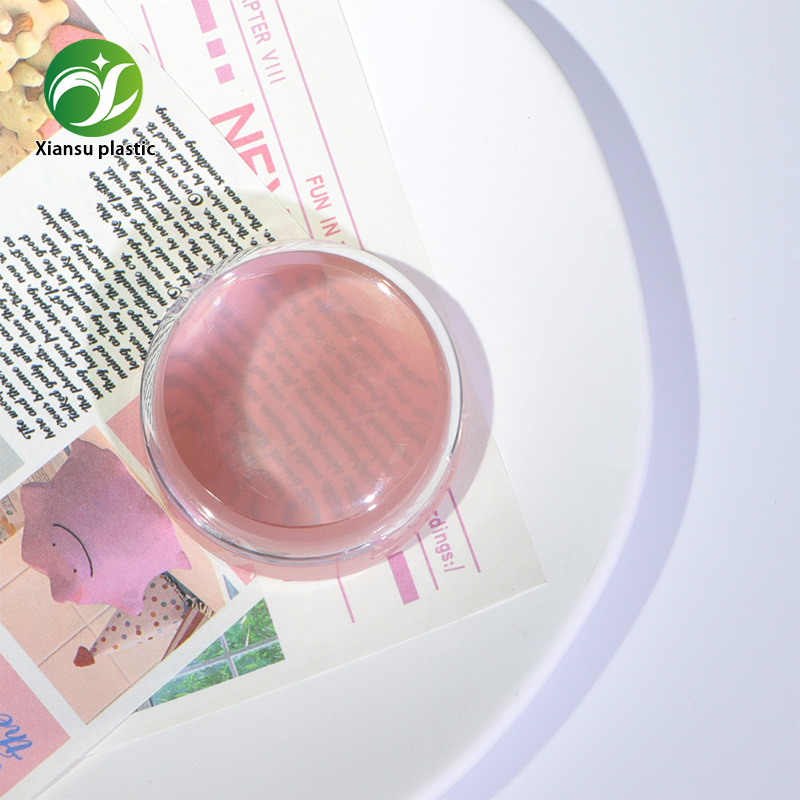
After the base packaging component is produced, surface decoration such as electroplating, hot stamping, screen printing, or gradient finishing must be applied. In a fragmented supply chain, each decoration type goes to a different subcontractor, creating a sequential queue that stretches the timeline. When an OEM cosmetic packaging manufacturer operates all decoration processes in-house, multiple finishing operations can run in parallel across different stations. For instance, a supplier with six automatic production stations, as found in facilities like Shenzhen Xiansu Technology, can simultaneously process logo hot stamping on one line while another handles matte coating and a third runs color injection molding. This parallel workflow is one of the most significant timeline accelerators in cosmetic packaging OEM projects, often cutting the decoration phase by 30 to 50 percent compared to multi-vendor coordination.
A common cause of launch delays occurs at the filling stage: the packaging arrives, but the brand's filling line cannot handle the component dimensions or closure mechanism smoothly. Experienced OEM cosmetic packaging suppliers address this upfront by offering machine compatibility matching as part of the development process. This involves verifying that the assembled packaging fits standard or custom filling nozzles, that closure torque or snap-fit force aligns with automation parameters, and that accessory placement such as cushion puff insertion or aluminum pan pressing runs without jamming. Pre-validating packaging-machine compatibility before mass production prevents the multi-week delays that occur when brands discover filling issues only after receiving their first shipment. This service is particularly valuable for startups and mid-size brands that may not have in-house filling engineering teams
A launch timeline stalls dramatically when a batch of packaging fails inspection and must be reworked or reproduced. Integrated OEM cosmetic packaging operations implement a three-tier quality control system: raw material inspection, in-process monitoring at each production stage, and comprehensive final inspection. Material verification at intake ensures that ABS plastic, AS resin, or other specified polymers meet impact resistance and dimensional stability requirements before injection begins. In-process checks at each station catch surface defects, dimensional drift, and assembly issues as they occur rather than after the full batch is complete. Final quality inspection covers appearance, functionality such as hinge durability and magnetic closure strength, and packaging integrity. This layered QC approach raises first-pass yield, eliminating the need for rework cycles that can add two to three weeks to a project. For brands targeting quick market entry, a supplier with documented in-process control is a more reliable launch partner than one relying solely on outgoing inspection.
The final phase of the launch cycle involves shipping, customs clearance, and documentation. An OEM cosmetic packaging supplier with global logistics experience, offering DDP, EXW, FOB, CIF, and CFR terms, gives brands flexibility in aligning delivery schedules with their launch calendar. Equally important is the supplier's ability to provide compliant documentation including material safety data sheets, certificate of origin, and packaging test reports that satisfy import requirements in target markets. Brands that select suppliers with proven export documentation processes spend less time resolving customs queries and more time executing their go-to-market plan. This logistical maturity is often a distinguishing factor between suppliers that deliver on schedule and those that cause launch delays.
Consider a scenario faced by many private label beauty brands launching a new pressed powder product in the European market. The brand initially approached a packaging supplier that outsourced mold production and electroplating to separate workshops. The projected timeline from design approval to delivery was fourteen weeks. After switching to an integrated OEM cosmetic packaging supplier with in-house mold development, decoration processing, and filling machine compatibility testing, the same project was completed in eight weeks. The time savings came from three sources: mold iteration was reduced from three rounds to one because the mold team and design engineer worked in the same facility; electroplating and screen printing ran concurrently rather than sequentially; and packaging-machine compatibility was validated during sampling rather than discovered at the filling facility. While specific supplier names and order volumes remain confidential in this example, the workflow pattern is replicable across integrated OEM cosmetic packaging providers.
Q: What is the typical lead time for OEM cosmetic packaging projects?
A: Lead time depends on project complexity and supplier capability. For standard cosmetic packaging with existing molds, sampling and production can range from 4 to 6 weeks. Custom mold development projects typically require 6 to 12 weeks from design to delivery. Suppliers with in-house tooling and decoration can reduce this by 2 to 4 weeks compared to those outsourcing these services.
Q: How can I verify a supplier's integration capabilities before placing an order?
A: Request a documented timeline breakdown showing mold development, decoration processing, and QC phases. Ask whether mold design, trial injection, electroplating, and printing are done in-house or subcontracted. Review the supplier's equipment list and in-process QC documentation. A factory visit or video walkthrough that shows multiple processing stations operating simultaneously provides direct evidence of integration.
Q: Does working with an OEM cosmetic packaging supplier mean I need large order quantities?
A: Most OEM cosmetic packaging suppliers set minimum order quantities based on mold amortization and production economics. Typical MOQs for custom packaging range from 5,000 to 10,000 pieces, though some suppliers offer flexibility for initial trial runs. Discuss your launch volume early in the conversation so the supplier can propose a realistic production plan, potentially including a phased ramp-up approach.


 EN
EN